 ('25)
('25)
('25)
('25)
Strategic Space Planning
for Residential Amenities Associated with
a Luxury Hotel Brand
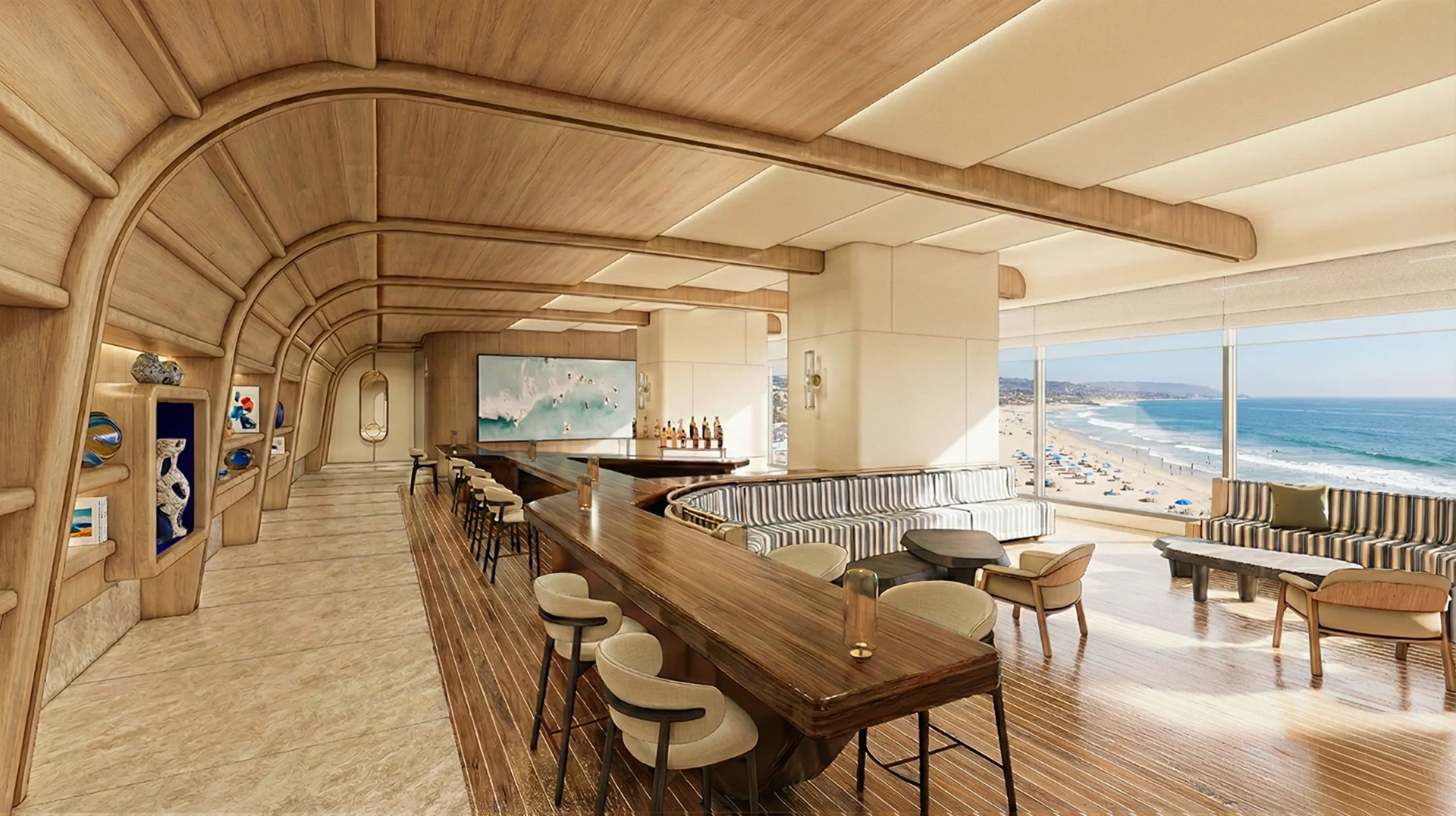
Busan—specifically the Haeundae district—is rapidly emerging as South Korea’s premier global destination after Seoul. For this project, our team was tasked with designing the residential amenities within a luxury hotel-residence complex. While leveraging the benefits of the associated hotel services, we intentionally differentiated the residential community spaces from overlapping hotel facilities.
Grounded in rigorous case studies and data analysis, our core design strategy focused on "Wellness"—a concept still relatively nascent in the Korean residential market. Targeting high-net-worth individuals, the team's proposal pivoted on an unconventional yet compelling premise: health and well-being as the ultimate luxury that wealth alone cannot buy.
In contrast to the hotel's transient amenities, the residential spaces were envisioned as intimate, cozy environments designed for frequent, comfortable, and prolonged daily use. Anchored by the "Vitality Salon"—a signature space rooted in the wellness philosophy—the facility serves as a holistic sanctuary for the physical and mental restoration of the residents.
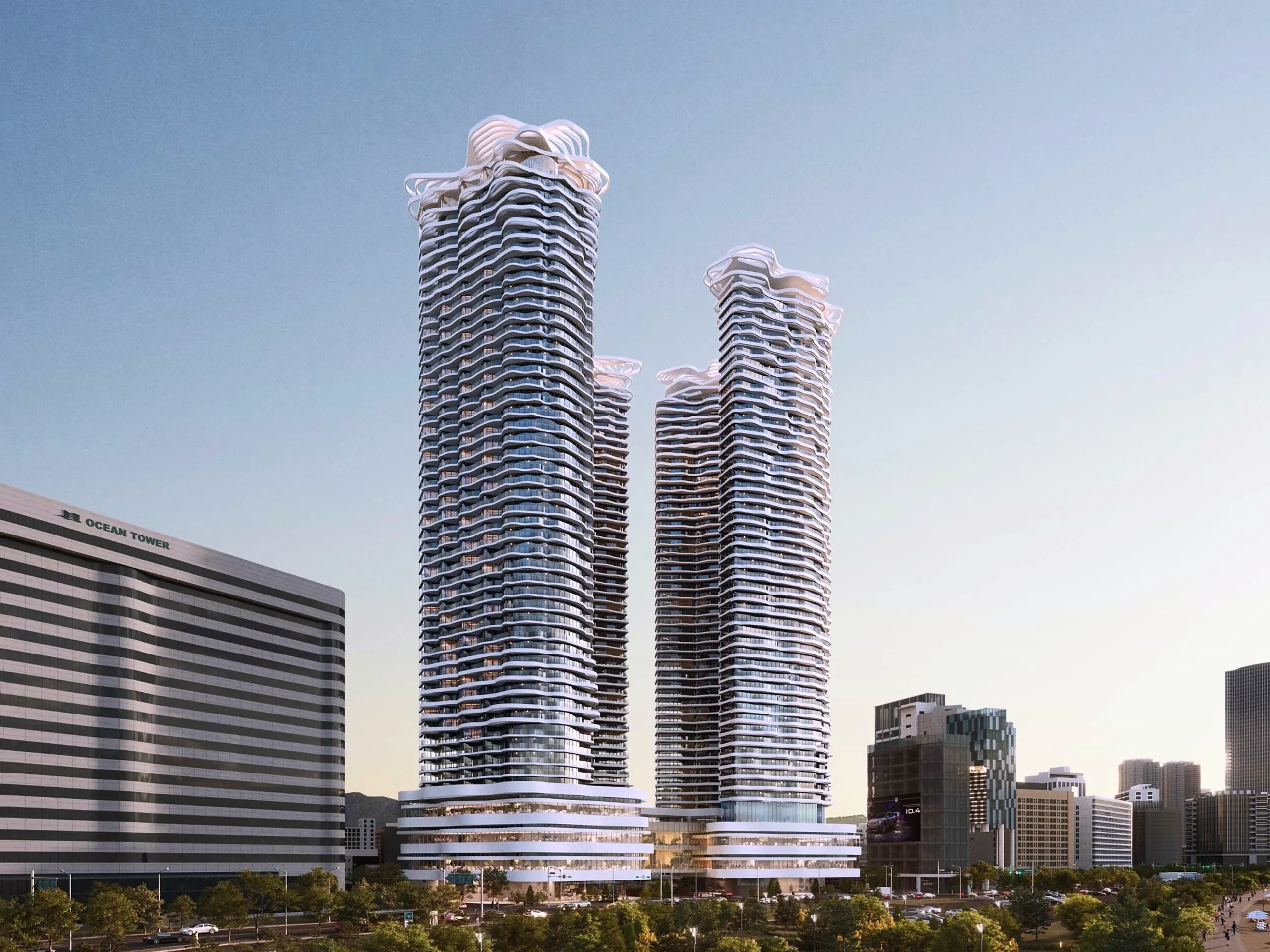
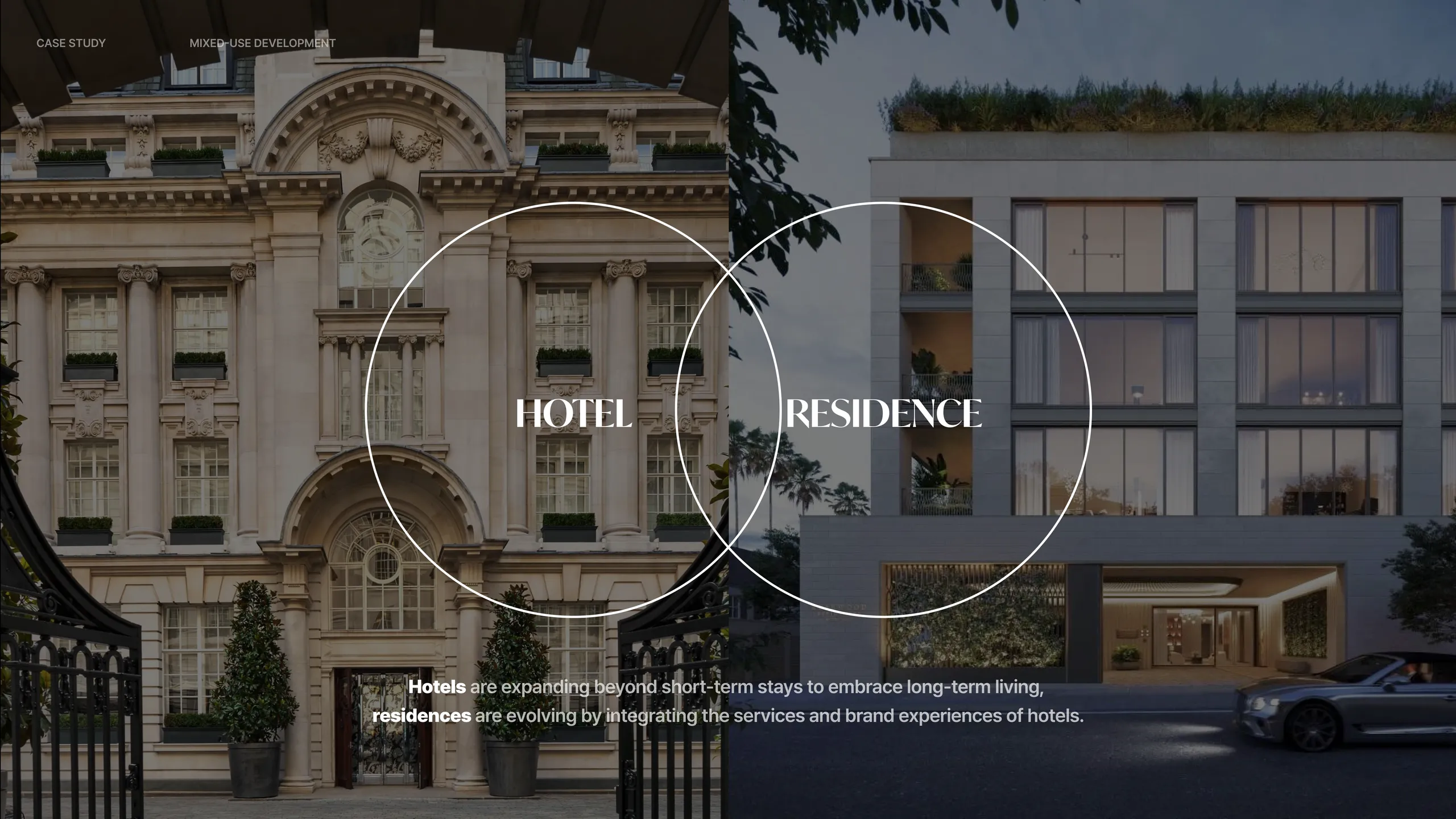
'Hotels are expanding beyond short-term stays into long-term living, while residences are evolving by absorbing hotel services and brand experiences.'
Synergy Analysis of Hotel and Residence Business Integration.
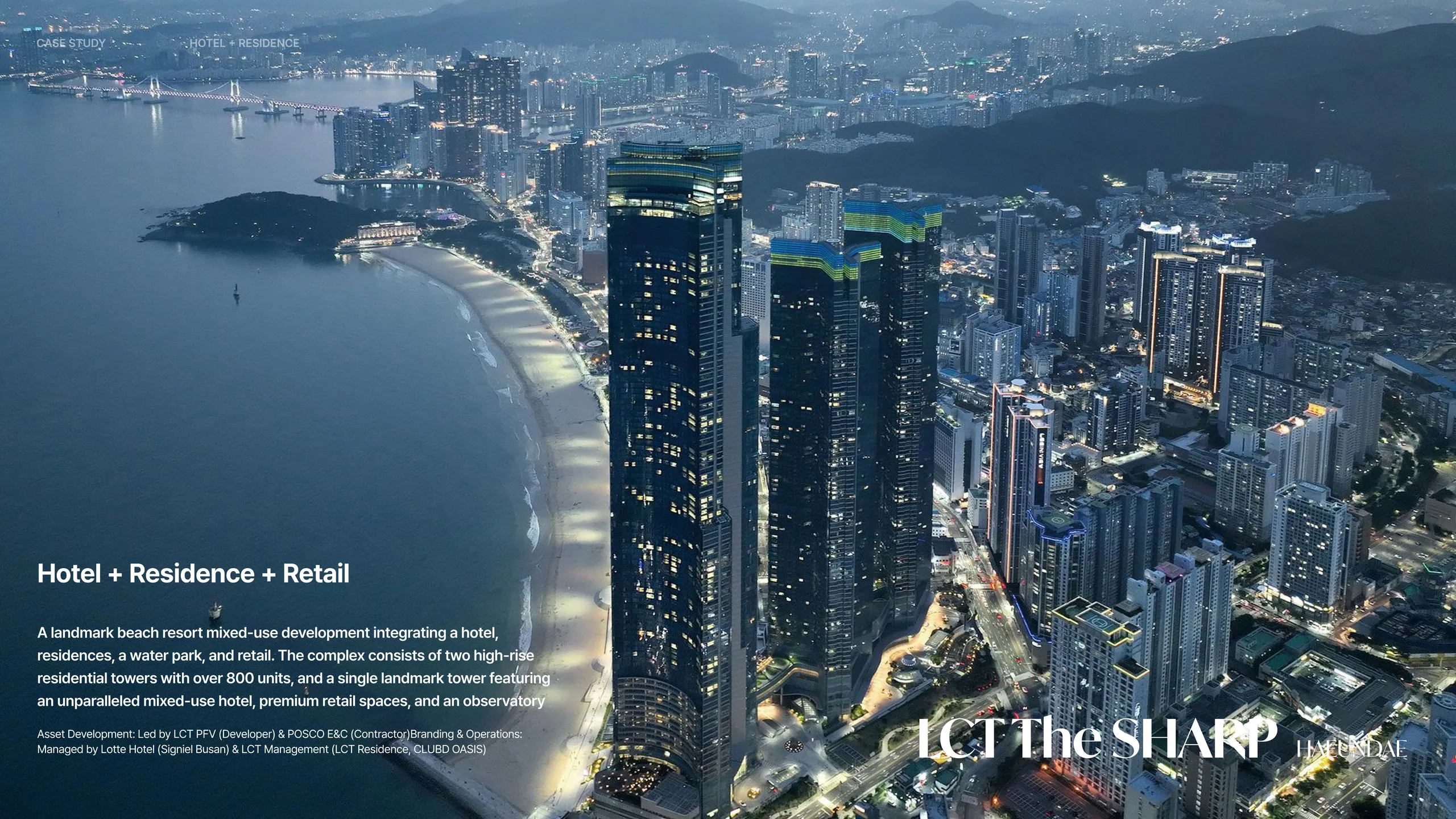
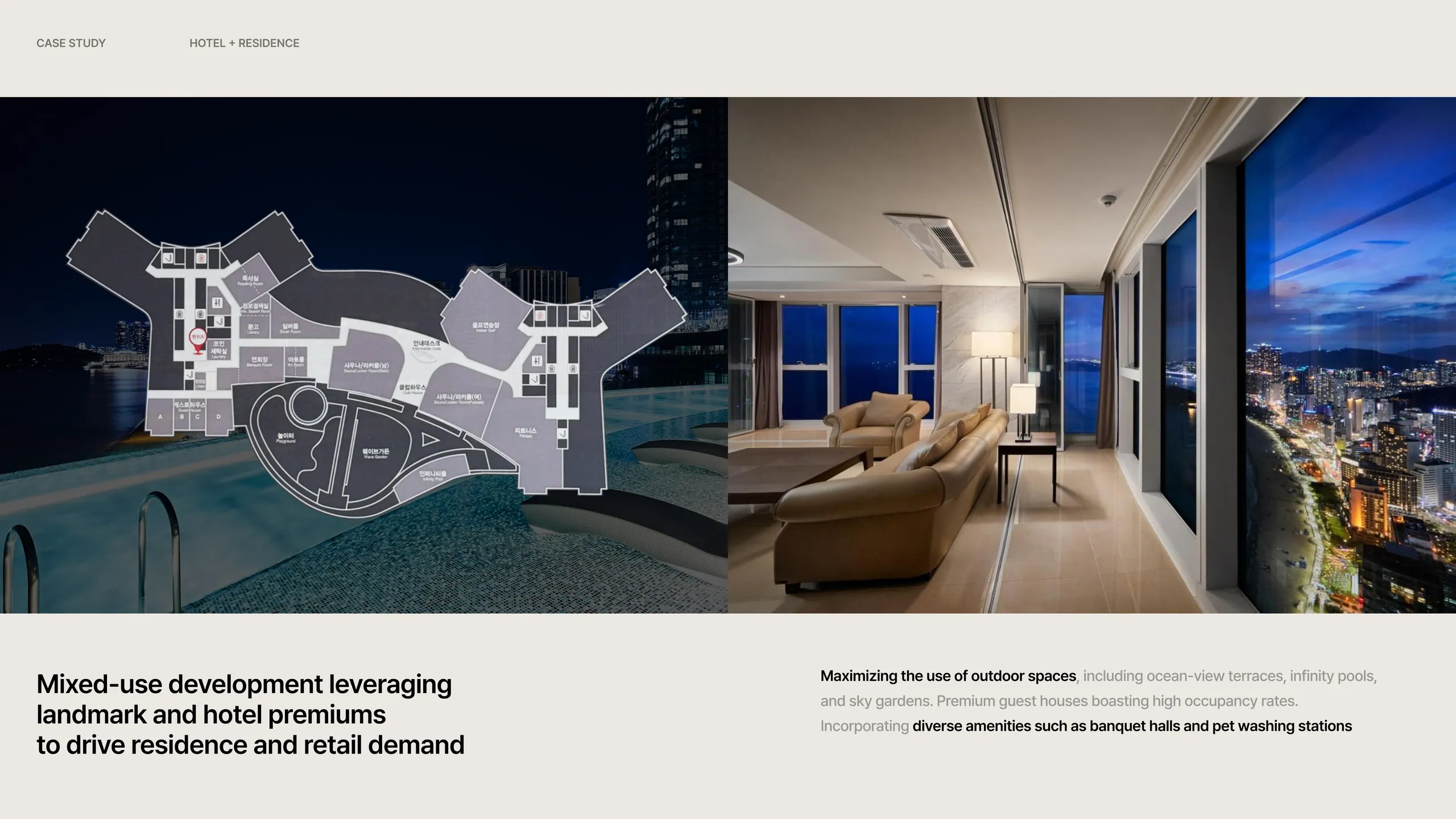
Key Findings and Design Implications from Domestic and Global Precedent Studies.
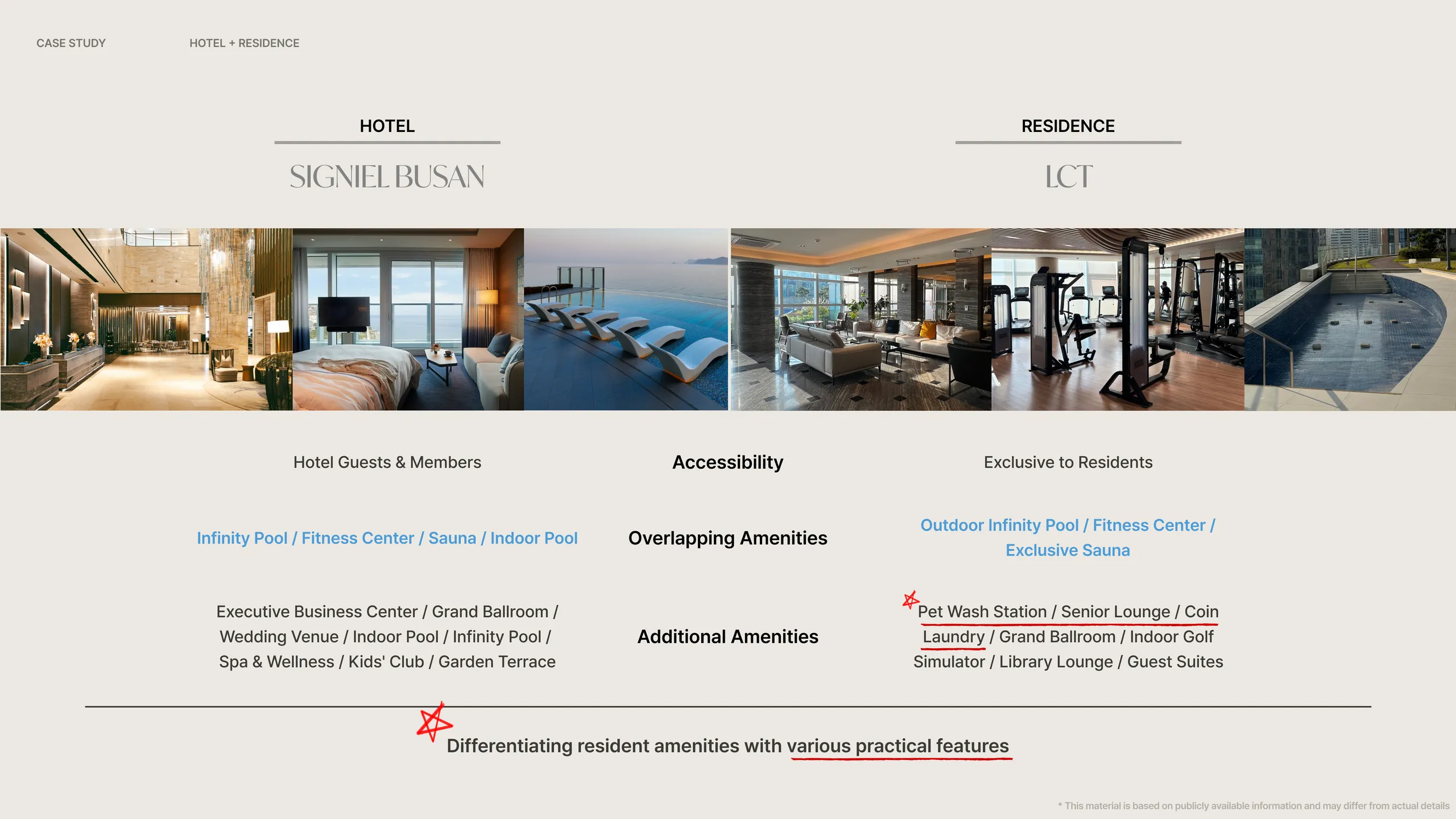
The vast majority are differentiating themselves by integrating the distinct features of both residences and hotels.
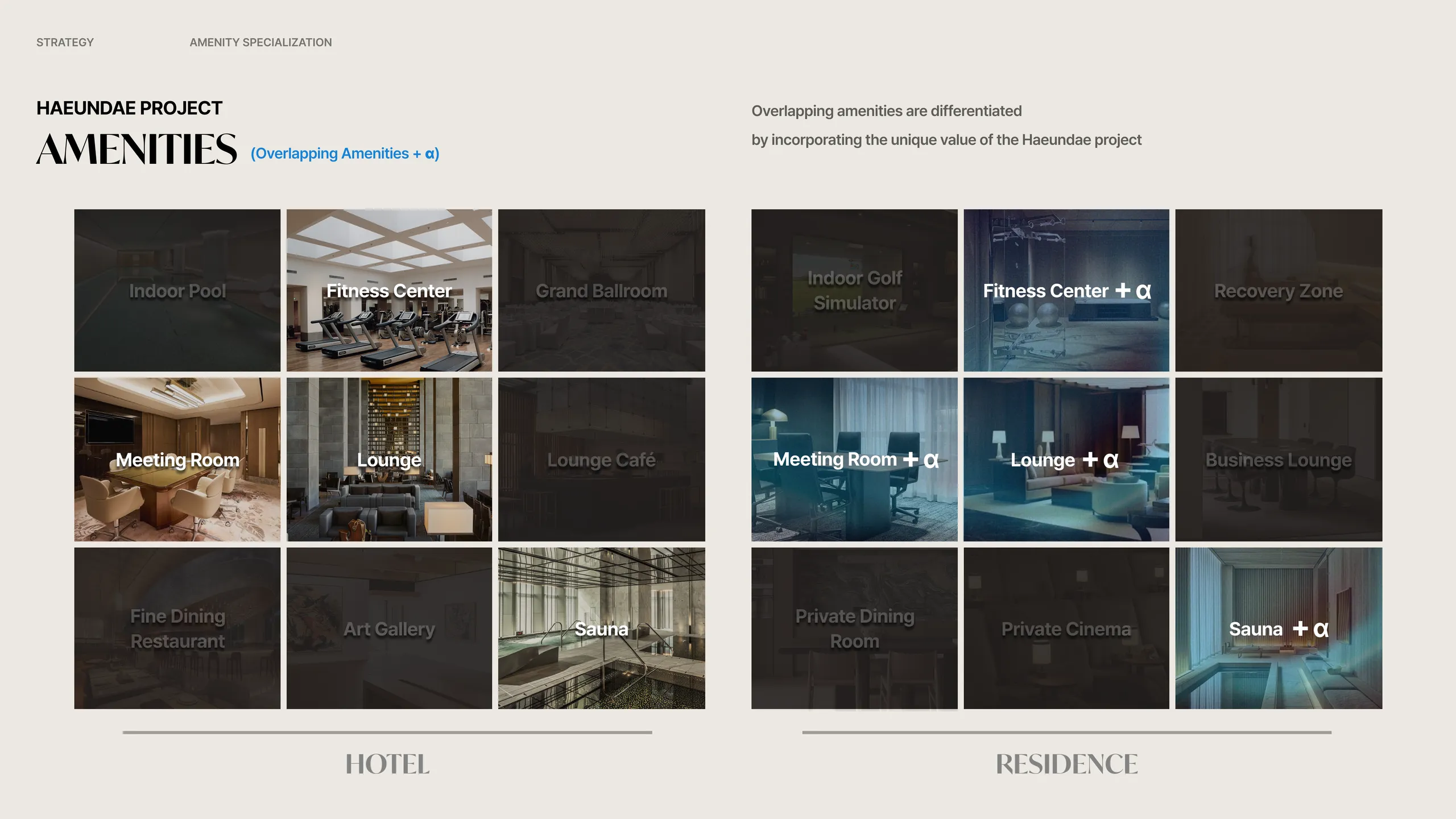
Current Overlap in Spatial Programming.
Overlapping facilities must incorporate added value for differentiation.
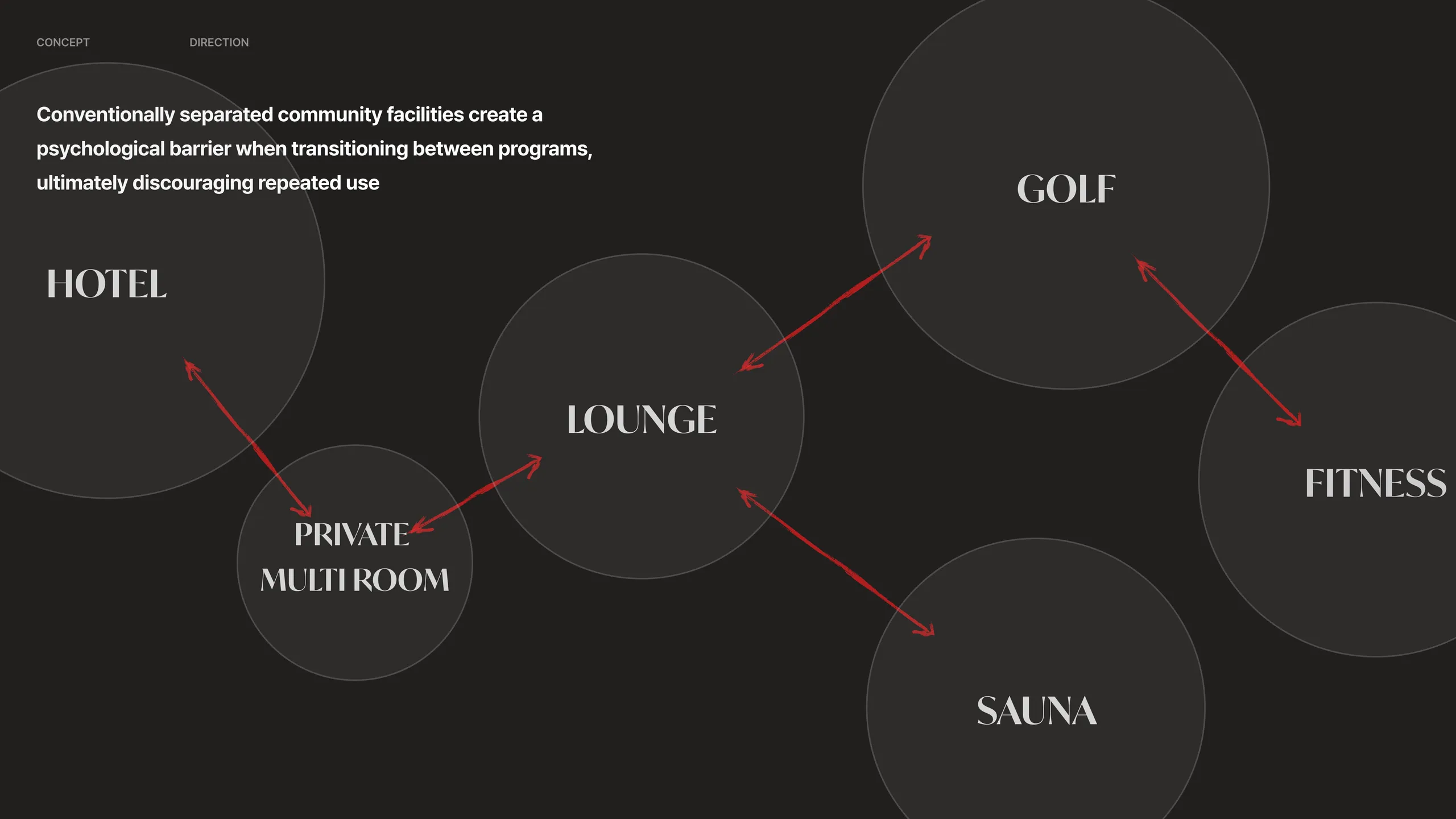
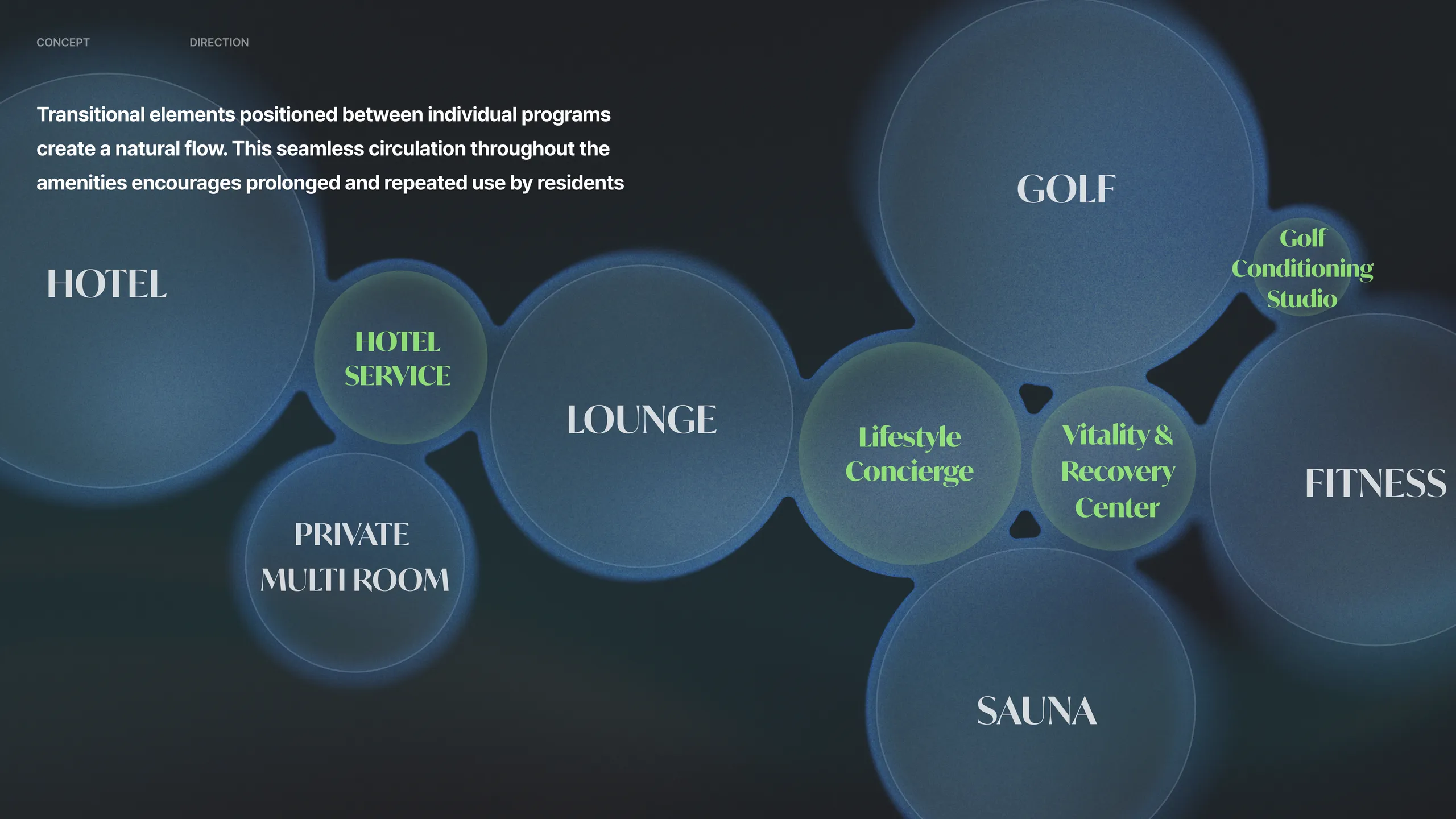
While these facilities are typically physically separated, transitional spaces are strategically positioned to seamlessly connect their functions.
Ex) A relaxation lounge bridging the golf and sauna areas.
Ex) A vitality recovery zone for post-fitness use.
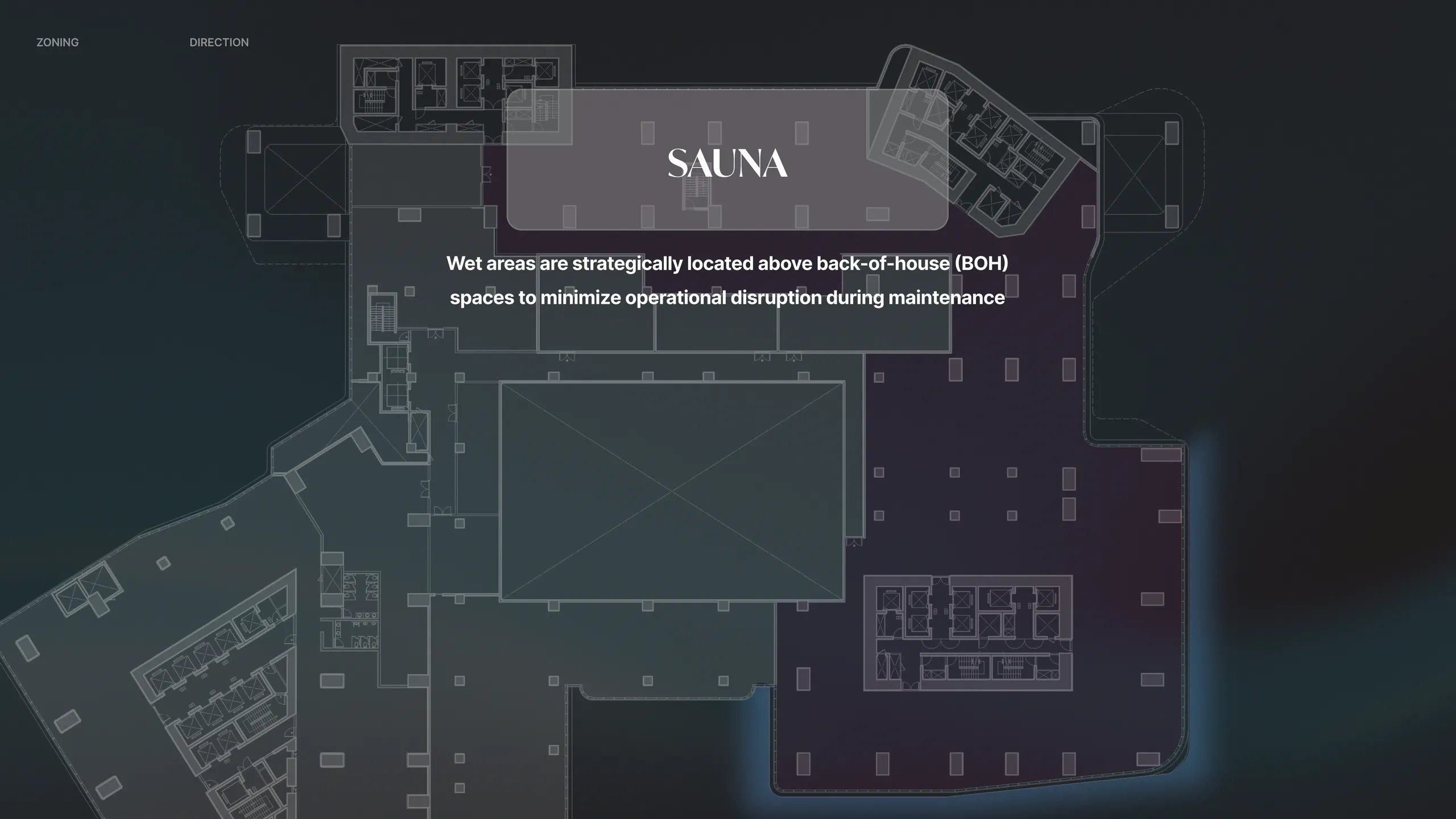
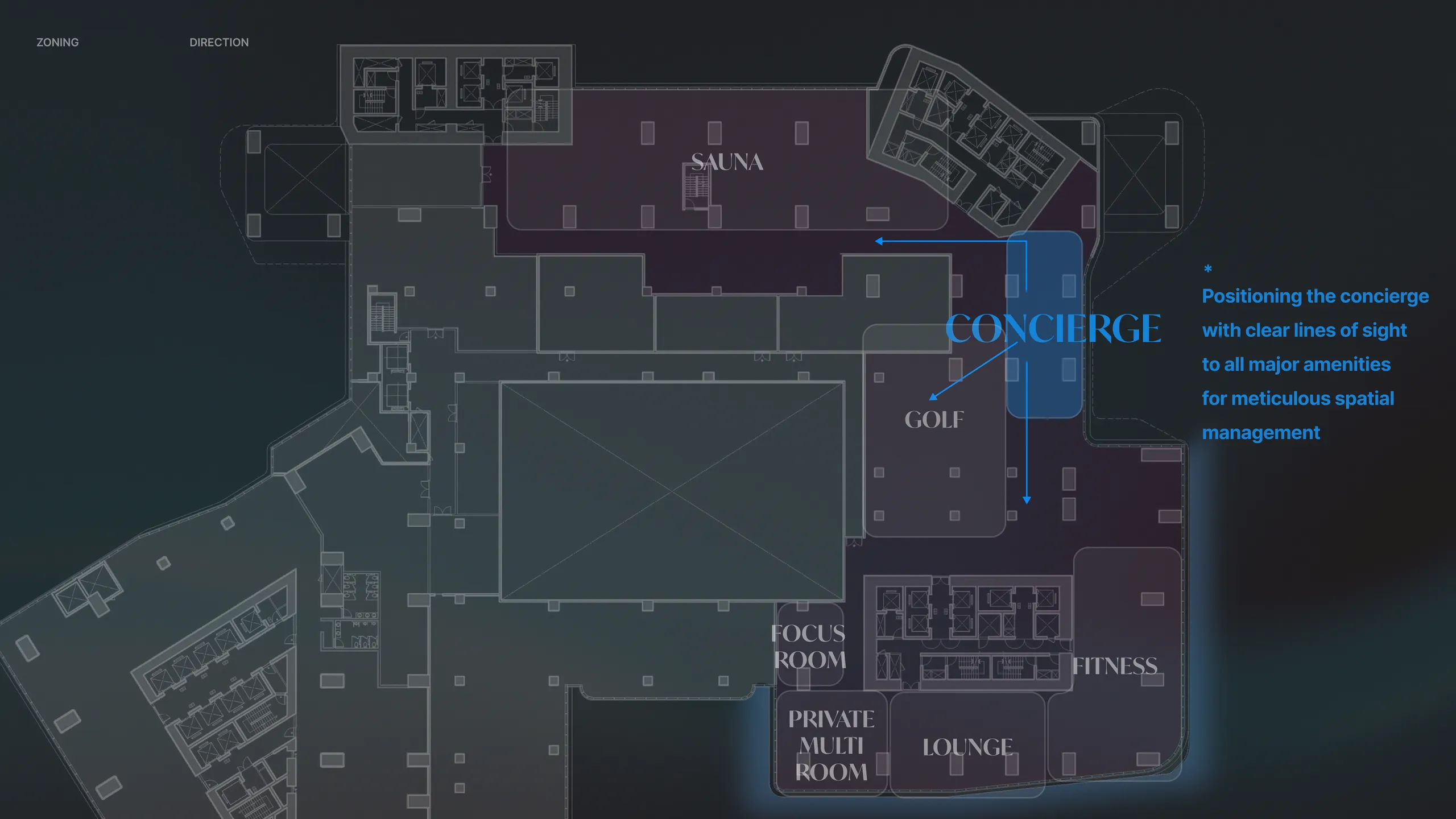
Spatial Planning Rationale: The strategic reasoning and layout justification for each specific space.
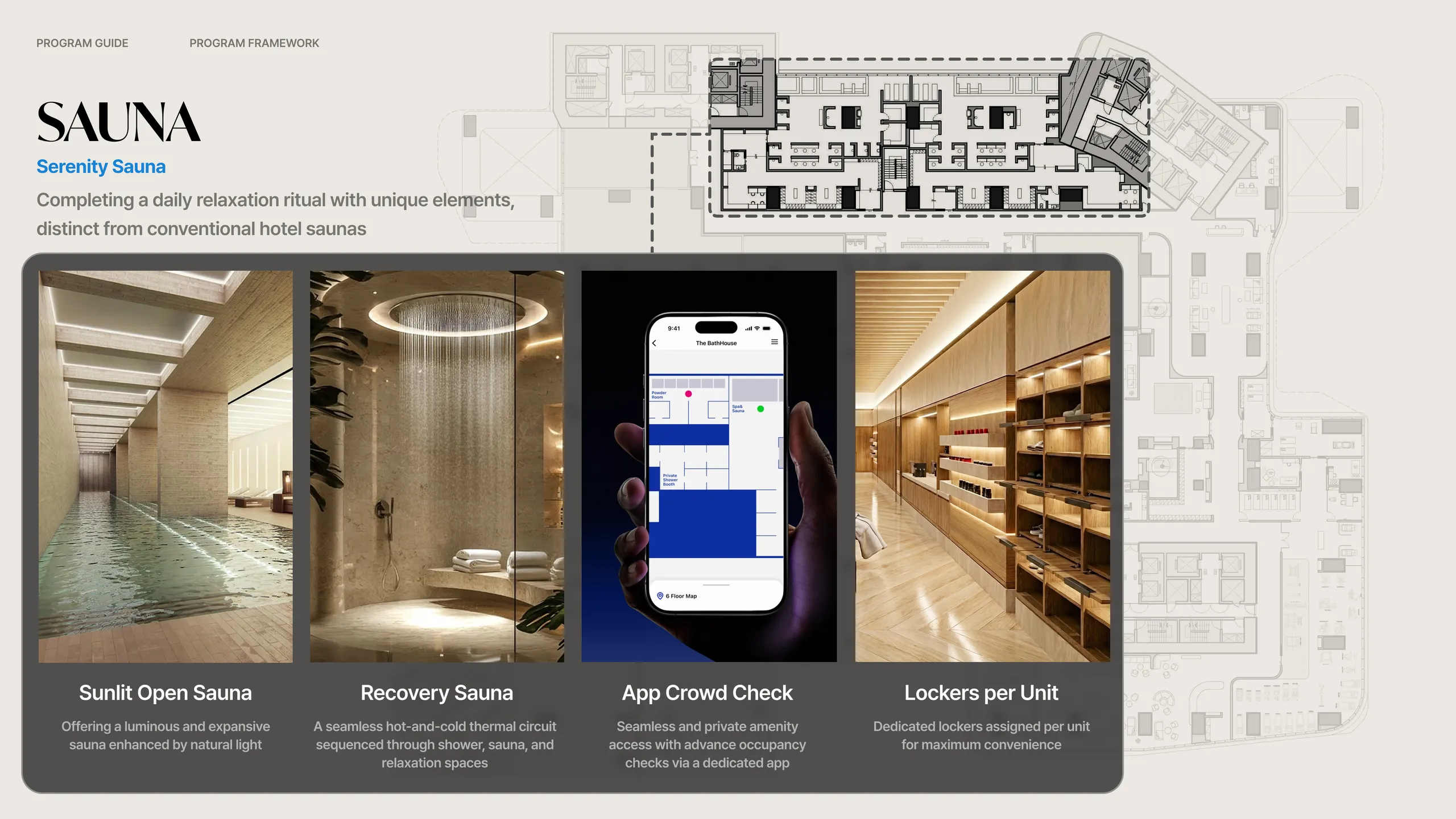
Proposed Differentiators and Tailored Services for Each Space.
Ex) Mobile reservation system for the sauna, dedicated private lockers per unit.